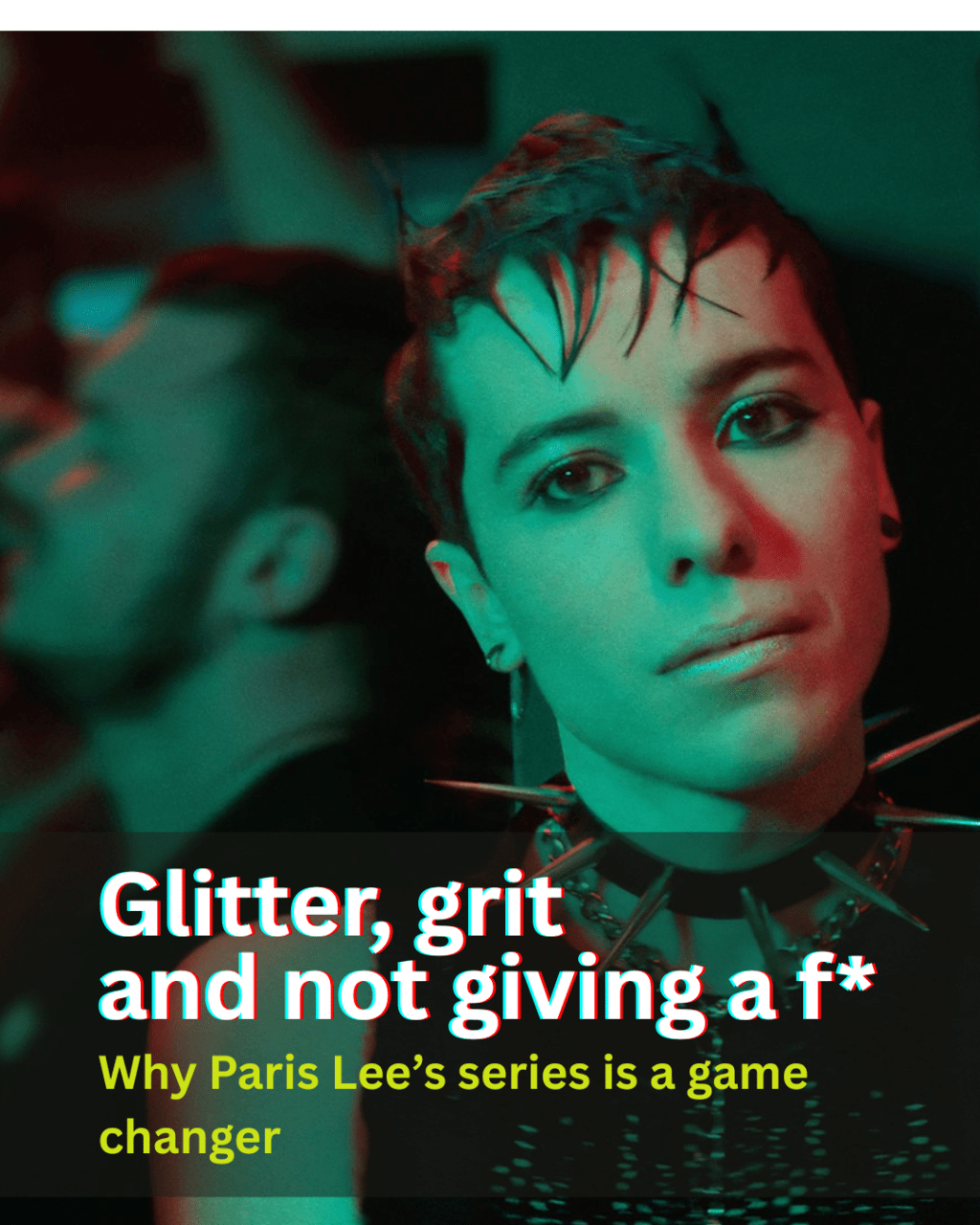
I first met Paris Lees when I was an intern at Attitude magazine. Even then you could see that same spark in Paris that now burns so brightly in Byron, the lead character in What It Feels Like for a Girl. That fearless, intoxicating freeness of not caring what the world thinks and radiating something magnetic in its place.
Paris had just been named Editor at Large at Attitude, and tongues were wagging, not least because of a Vice article in which she unapologetically wrote about “pussy juices” in Everything I’ve learned about sex.” It was headline bait, sure, but it was also pure Paris: honest, provocative, defiant. While other upper middle class gays clutched their pearls, for a young intern from the Welsh valleys, it was electric to watch her move through the world like that. Paris was, and is, a force.
That same force pulses through every frame of What It Feels Like for a Girl. Based on her memoir, the series tells the story of Byron, a teenager growing up in a working class Nottingham estate in the late nineties. It is about surviving, but not in the usual tragic sense. Byron does not see themselves as a victim. They are not asking for your sympathy. They are out to thrive, and they will do it in eyeliner and lip gloss, with a grin and a middle finger.
This series is a revelation.
It’s that spirit of defiance that makes it so powerful. I think back to my A Level media studies and the essay I wrote on the rebellion and rawness of Skins. But if Skins was a mood board of teenage chaos, What It Feels Like for a Girl is the lived reality beneath it. Skins is to What It Feels Like for a Girl what Twilight is to True Blood — same genre, maybe, but a world apart in depth, danger and bite.
The series pulses with nostalgia: fluffy pink pens, Smash Hits posters, nineties pop playing in the background like a heartbeat. It captures a shared memory the way It’s a Sin did, but here, the joy is louder, the pain sharper and the humour more cutting. It is not a sad story. It is funny, fierce and full of fight. And it is not romanticised. It is gritty, messy, very real and all the more beautiful because of it.
What It Feels Like for a Girl deserves to be celebrated, taught and shouted about from rooftops. It is bold, brilliant television. It does not ask for permission. It does not play nice. It just is, and we need more stories like that.
I really, really hope we get to see more.
 Queeraeth
Leave a comment